Evidence & Law PressINDEPENDENT PUBLISHING · LLC
Evidence & Law Press, LLC

Put history
and power
on trial.

A familiar story is still a claim. An established institution still owes an explanation.

Books by A. Winston Andrews examining the evidence behind historical narratives and the legal foundations of institutional authority.

Examine the books ↗What we stand for
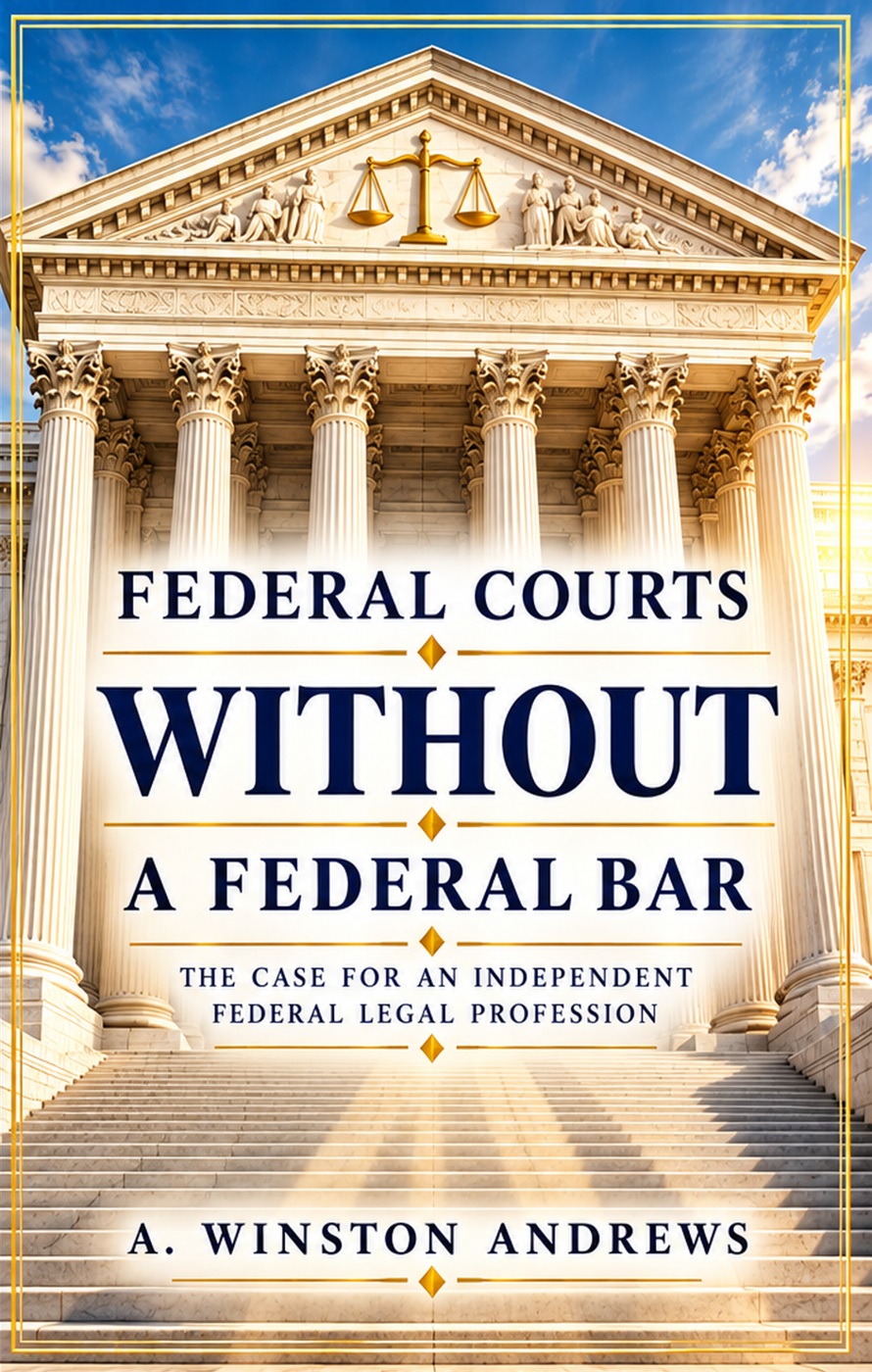
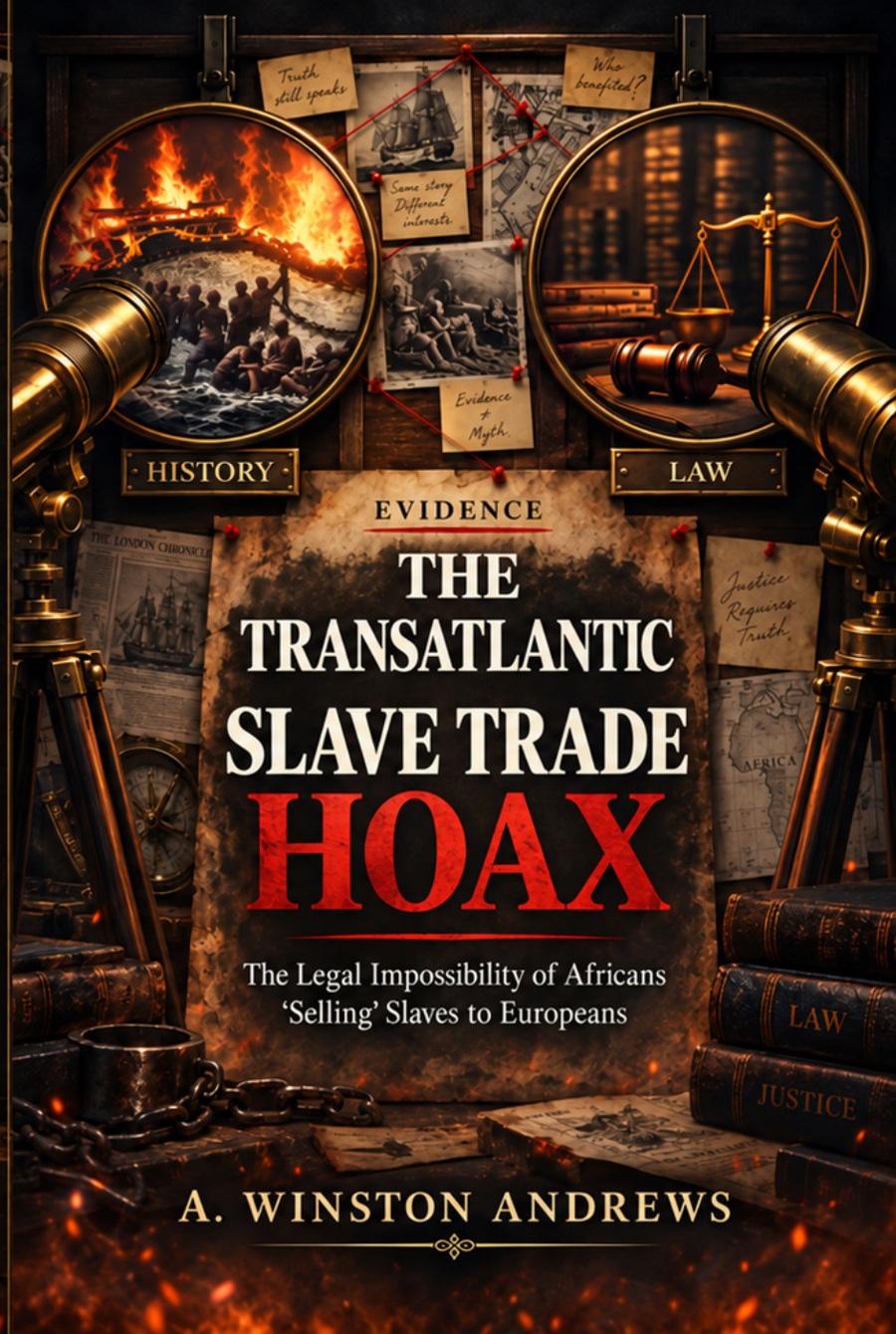
The Transatlantic Slave Trade Hoax — front coverFederal Courts Without a Federal Bar — front cover
Two books. One demand: show the evidence.
NO CLAIM ABOVE EXAMINATION.NO INSTITUTION BEYOND SCRUTINY.NO CONCLUSION WITHOUT REASON.
The books

Challenge what
you were told.

Two inquiries into the distance between accepted authority and demonstrated truth.

The Transatlantic Slave Trade Hoax by A. Winston Andrews
01 / History · Property · Consent

The Transatlantic
Slave Trade Hoax

A transaction was recorded.
Was a lawful sale ever proved?

“Africans sold Africans.” Repetition has given the claim the force of a verdict. Andrews asks whether the evidence establishes the ownership, authority, capacity, and consent that a lawful sale would require.

A legal challenge to the language through which human acquisition became accepted history.

Enter the argument ↗Reserve your copy →
Federal Courts Without a Federal Bar by A. Winston Andrews
02 / Constitution · Courts · Professional power

Federal Courts
Without a Federal Bar

An independent judiciary.
A profession governed by the states.
Who holds the power?

The federal judiciary exercises national constitutional authority. Yet the lawyers who appear before it are licensed and disciplined largely through state systems.

Andrews examines that structural tension—and makes the case for an independent federal legal profession.

Examine the case ↗
The press · Our purpose

Authority is a reason
to ask questions.
Keep asking.

Evidence & Law Press publishes books that confront consequential claims about history, law, and institutional power. Our starting point is a demand: identify the evidence, state the governing principle, and defend the conclusion.

01 / Evidence

Read the record.

Ask what a document establishes, whose account it preserves, and what it leaves unresolved.

02 / Principle

Test the premise.

Examine the ownership, consent, authority, and independence an argument assumes.

03 / Judgment

Demand reasons.

Make the reasoning visible so readers can assess the argument for themselves.

The mind behind the questions

A. Winston Andrews

B.Sc. (Summa cum laude, Economic & Political Science) (U.S.), J.D. (Cum laude) (U.S.), LL.M. (U.S.), LL.M. (U.K.).

A legal scholar, legal researcher, and writer, Andrews examines the intersection of law, history, institutional power, and racial justice.

Across these books, he brings the same method to different subjects: interrogate the asserted authority, examine the underlying record, and require the conclusion to answer to the evidence.

Explore his books ↑

Read the claim.
Examine the case.

Choose your inquiry ↗